Incoterms:DDU Duty, customs fees and taxes are collected at time of delivery.
Please confirm your currency selection:
US Dollars Free shipping on most orders over $230 (USD). All major credit cards accepted
Euros Free shipping on most orders over 200 € (EUR). All major credit cards accepted
South African Rand Free shipping on most orders over R3 800 (ZAR). American Express not accepted as a method of payment
British Pounds Free shipping on most orders over £170 (GBP). All major credit cards accepted
Share This
The link could not be generated at this time. Please try again.
I/O Modules
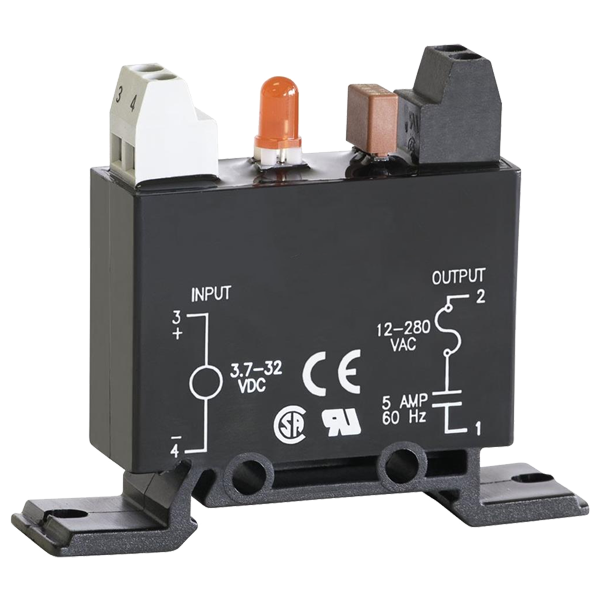
I/O Modules are in stock with same-day shipping at Mouser from industry leading manufacturers. Mouser is an authorized distributor for many I/O module manufacturers including Advantech, Grayhill, Omron, Opto 22, Phoenix Contact, Siemens, Weidmuller & more.
I/O modules are industrial interface devices that enable communication between controllers and field devices by receiving input signals and transmitting output commands within automation systems. They serve as critical connection points between sensors, actuators, switches, and PLCs, allowing real-time monitoring and control of manufacturing processes and equipment. Designed for reliability and scalability, I/O modules help simplify system integration, expand control capabilities, and support efficient operation in demanding industrial environments.
Applications: I/O modules are commonly used in PLC systems, factory automation equipment, process control installations, material handling systems, robotic cells, manufacturing lines, and industrial monitoring applications to collect field data and control connected devices.
Common Types: Common I/O module types include digital input modules, digital output modules, analog input modules, analog output modules, remote I/O modules, safety I/O modules, and multifunction I/O modules designed for diverse industrial automation requirements.
Selection requirements: Choosing an I/O module requires evaluating signal type compatibility, channel count, voltage and current requirements, communication protocols, isolation needs, environmental specifications, scalability requirements, and controller compatibility to ensure reliable performance in industrial automation applications.