


Helping today's students become tomorrow's engineers
Mouser Electronics was founded by a physics instructor, Jerry Mouser, who needed components for a newly formed electronics program at his school. That founding idea is still at the heart of our company. That’s why we support educators and aspiring engineers with a wide range of high-quality products, competitive prices, prompt and precise order delivery, and exceptional service
Explore engineering resources for university students, covering programming basics, career guidance, and support until graduation. Dive into specific topics or explore new ones with our diverse materials.

Educational discounts
Mouser offers special pricing on eligible products for qualifying educational customers. Please complete the registration form online. Or you may contact our University Sales team at unisales@mouser.com or contact your local EMEA Customer Service Representative.
Once your registration is accepted, your school or institution will be given the special pricing when ordering online at mouser.com. We are excited to help you empower students to become tomorrow’s engineers.
Inspiring projects
We are proud to support student projects at universities and help them turn their creative ideas into reality.
If you are a student looking to start a project at your university, don't hesitate to contact us. Together we can push the boundaries of what is possible and shape the future.
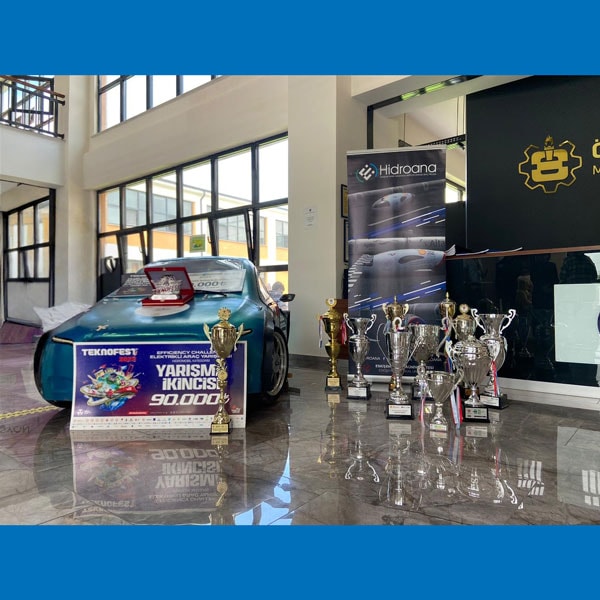
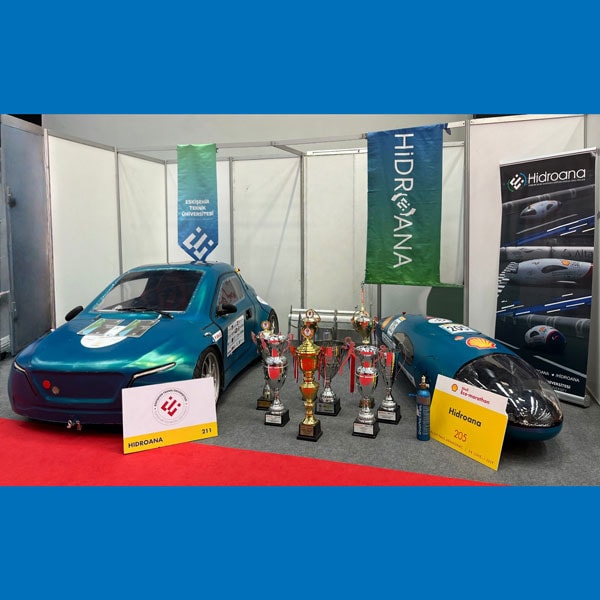
ESTU Hidroana



The Hydrogen Powered Vehicle Project at Eskişehir Technical University, founded in 2007, is a leading alternative energy initiative in Turkey. Driven by volunteer engineering students from various disciplines, it has been advancing hydrogen-powered vehicle technology for 17 years, promoting innovation and sustainability.
The Team
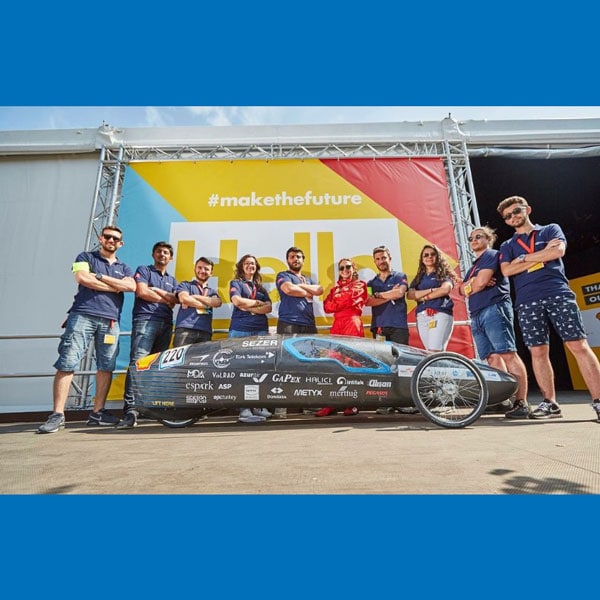
Hidroana is a student-led team from Eskisehir Technical University, focused on developing hydrogen-powered vehicles. Comprised of volunteer engineering students, the team works on alternative energy solutions, competing in national and international events to promote hydrogen use and advance sustainable transportation technology.
The Mission
Our mission is to promote the use of hydrogen as an alternative energy source both in Turkey and globally. We strive to compete annually and be a team remembered for excellence in national and international races, advancing hydrogen technology year after year.
The Outcome
Our project emphasizes task division and research to deliver the best results, promoting hydrogen use in daily life for a cleaner world. We aim to continuously develop and establish a strong reputation in the field of alternative energy.

TLMoto – Técnico Lisboa Moto


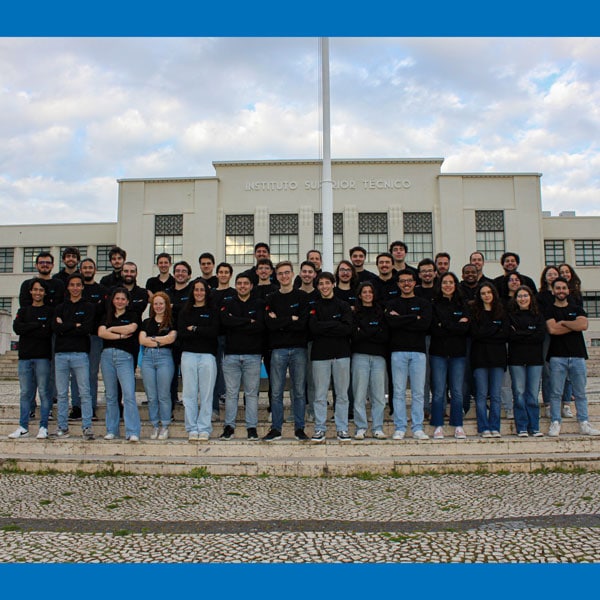
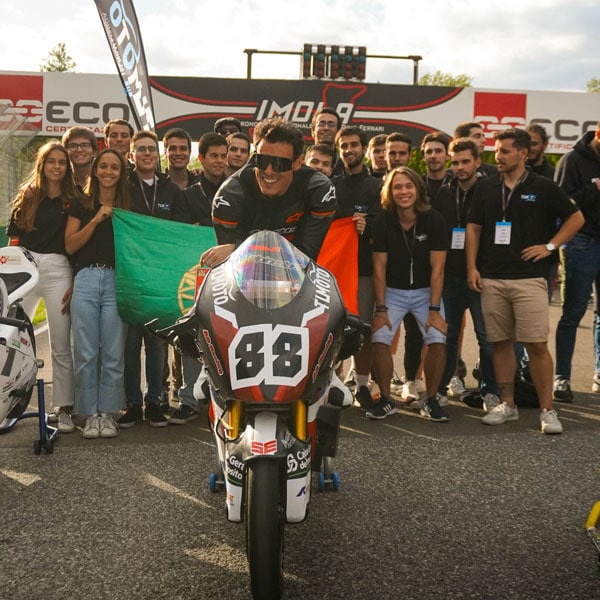
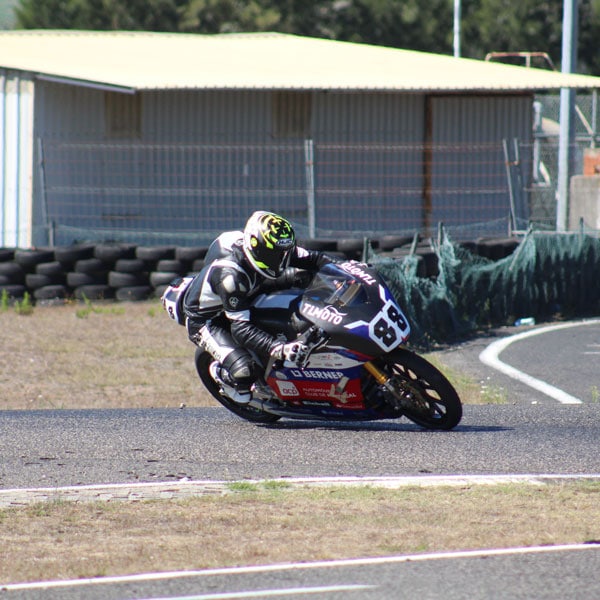
TLMoto is a student team from Instituto Superior Técnico, Portugal, that designs and builds 100% electric racing motorcycle prototypes for MotoStudent, a major international engineering competition in Aragon, Spain, and occasionally for other international competitions.
The Team
The TLMoto team consists of students from multiple universities and various fields of engineering, such as mechanical, aerospace, and electrical, as well as areas like nursing and psychology. All members work together to create a new and improved motorcycle each time.
The Mission
The team's mission is to create a sustainable electric motorcycle for competitions that optimizes resource efficiency, promotes continuous innovation in each prototype, and offers training opportunities for its members.
The Outcome
The TLMoto team has already completed three prototypes, two of which are electric. Currently, the team is finishing one prototype and simultaneously working on a new one, the TLMoto05. TLMoto team is also proud to have developed Portugal's first electric racing motorcycle.
GO Team
Team GO is a group of five students of Microsystems Engineering. Each member is experienced in a different field such as: Microfluidics, Microelectronics, Computer Science and Material Processing.
The Workshop
The workshop MST Design Laboratory is offered by the department of Microsystems Engineering at the University of Freiburg to find new ideas and inspiration for products with microsystems that are not yet on the market.
The Mission
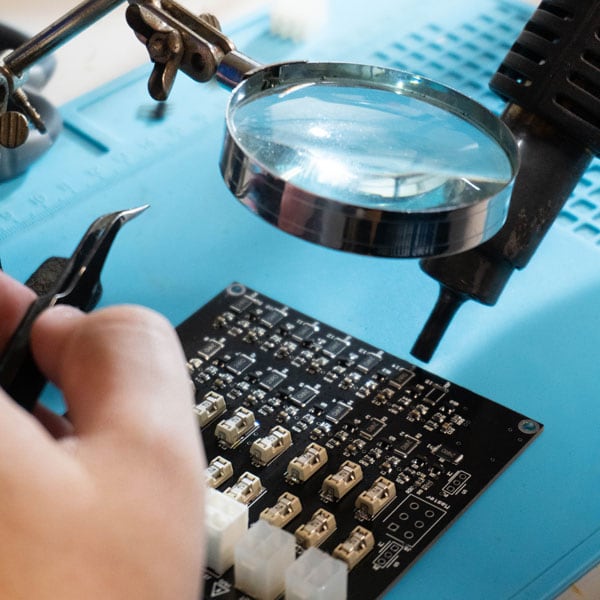
The penile prosthesis is a medical device. The internal part contains a penile implant, two micropumps, an Adafruit control board, a battery and a pressure sensor to give feedback about the pressure generated in the penile implant. The external part is the cell phone that controls the pumps and a charger that transfers energy to the battery via inductive coupling. When the micropumps receive the LE Bluetooth signal sent from a cell phone, it will fill the cylinders with distillated water and consequently, the implant inflates.
The Outcome
The project was presented at the institute of Microsystems Engineering (Imtek) and it received a lot of attention. The prototype is now at the showroom of the Biomedical Microtechnology Chair in Imtek.


Policumbent
The Team
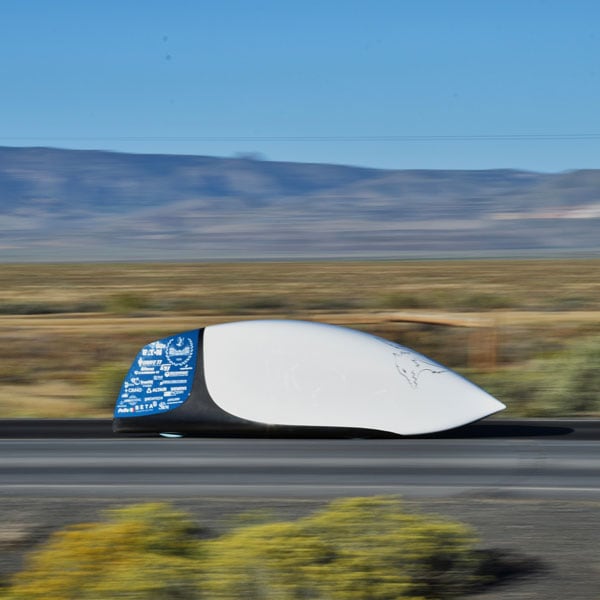
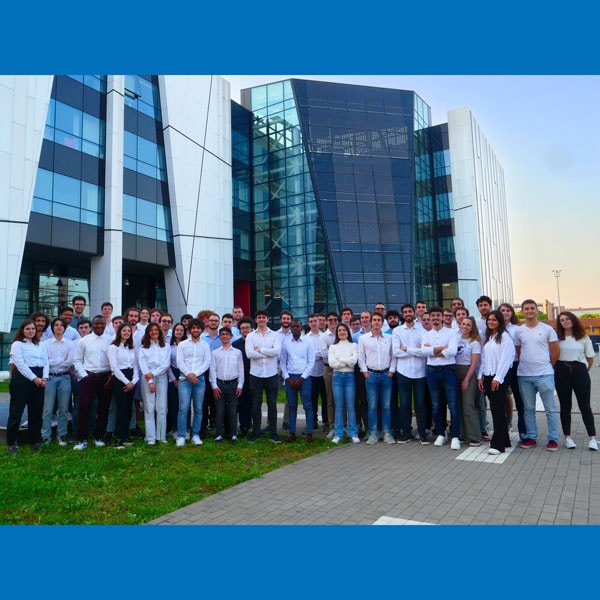
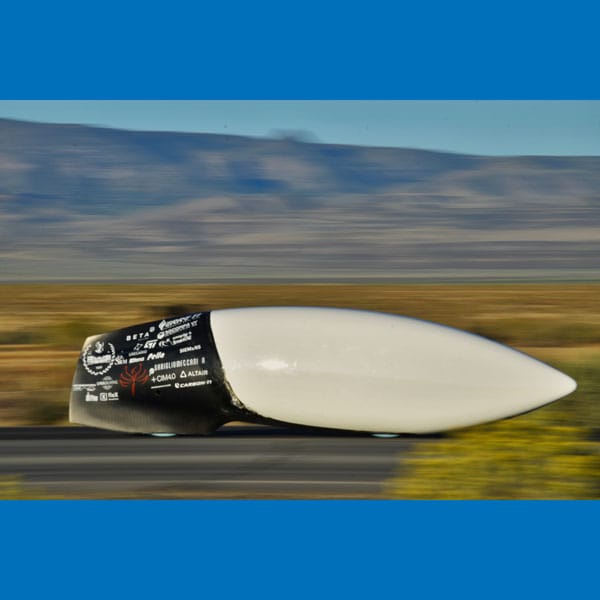
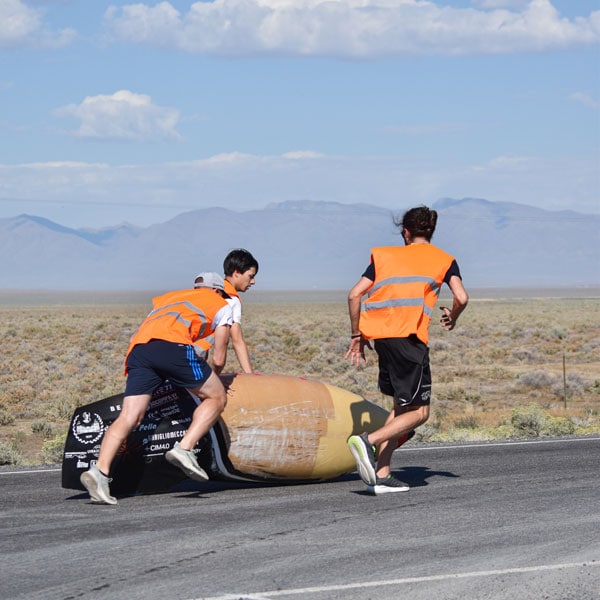
Policumbent is a student Team from Politecnico di Torino, born in 2009, which aims to beat the world speed record for human-powered vehicles. The team is made up of bachelor’s and master’s degree engineering and design students. It is divided into several areas that work together to design and build the most efficient vehicles on Earth.
The Mission
To design and build prototypes to beat the world speed record for human-powered vehicles. In doing so, the entire team studies and works together to reduce at their minimum the mechanical and aerodynamic dissipations. In the last three years, its members are also using this knowledge for a completely new urban-mobility project, which will have a fully bio-based aerodynamic fairing made of flax fibers and 100% bio-based resin, making it fully recyclable and natural.
The Outcome
In its history, the team has won several editions of the World Human Powered Speed Challenge (WHPSC). It set the second highest speed in the female leg-powered vehicle and man trike arm-powered vehicle categories, both being also Italian speed records, respectively with 123.88km/h and 82.88km/h. It also holds the Italian record for the man leg-powered vehicle reaching 136.49km/h.
Quest

QUEST (Quad-spectral Unaided Experimental Scanner of Topography) is a space technology project of the JMU Würzburg. As part of the REXUS/BEXUS program, it was established as a result of an agreement between the German Aerospace Center (DLR) and the Swedish National Space Board (SNSB).
The Team
Most of the team members are students from the University of Würzburg. Each team member is assigned to one department: Project Management, Electrical Engineering, Mechanical Design, Public Outreach and Software.
The Mission
QUEST scans the planet surface by analyzing an array of four light sensors (RGB and IR) and a spectrometer. The goal is to build an autonomous system which can be used in interplanetary missions with demanding constrains on the bandwidth. Therefore, we must develop a reusable algorithm that can be adjusted with different parameters for varying planet surfaces.
The Outcome
In 2018, QUEST successfully flew over Northern Sweden. The team was able to take many pictures and analyze them autonomously on board of the balloon. Even though one sensor failed in test procedures just before the flight, the system reacted autonomously ensuring there were no further complications.


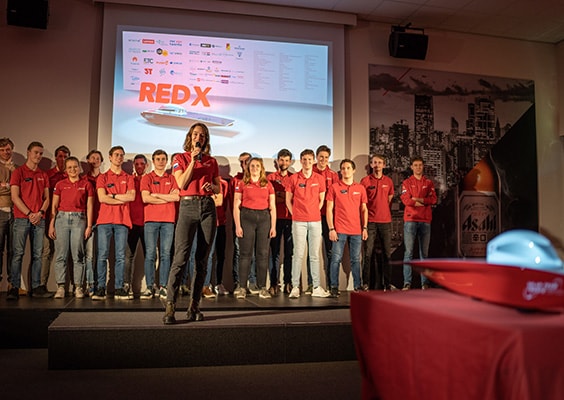
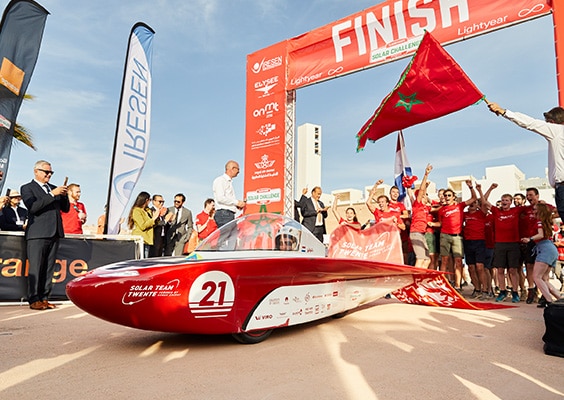
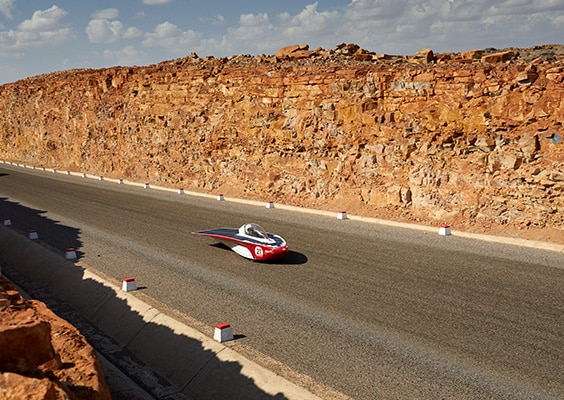
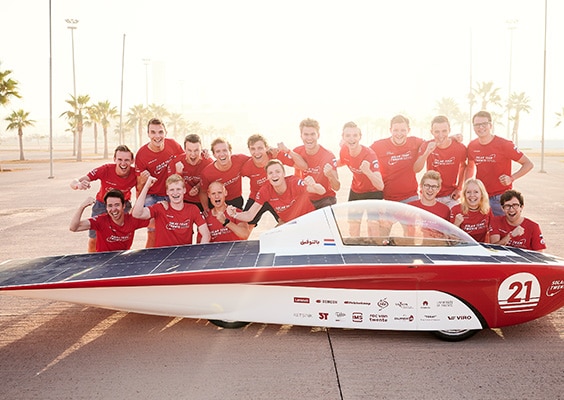
Solar Team Twente
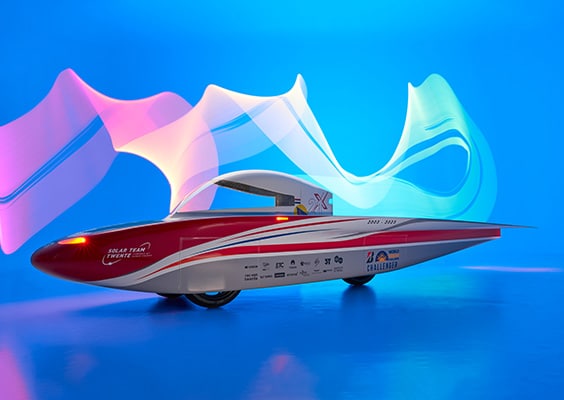
Solar Team Twente spends one and a half years designing and developing a solar car and will transport it to the other side of the world, Australia, to participate in the Bridgestone World Solar Challenge.
The Workshop
Solar Team Twente competes in the Challenger Class of the Bridgestone World Solar Challenge, the world championship of solar racing. The team will drive from Darwin to Adelaide using only the energy of the sun!
The Mission
The mission of Solar Team Twente is to finish first in the Bridgestone World Solar Challenge to prove innovative technologies and sustainable ways of transportation.
The Outcome
We inspire the world to trust in solar energy. To show how solar energy can contribute to the energy transition in the world. With collaboration and innovation, we can inspire the world.
Team Vision
The members of Team Vision met in 2015 at the Faculty of Automation and Computer Science of the Technical University of Cluj-Napoca. In the beginning the main goal was to learn new things and acquire new skills by doing.
The Team
Team Vision is a robot-sumo team that takes part in 5 to 7 contests and conferences per year. In addition, the team was invited, together with their professor to “Pro Invent 2018”, the International Exhibition of Research, Innovation and Inventions. This exposure helped them interact with other passionate engineers and exchange new ideas.
The Mission
The team builds autonomous robots, designed to fight in robot-sumo competitions. They build these robots from scratch, therefore, there is a need for mechanical and electrical engineering and programming knowledge.
The Outcome
In 2017/18, our team has become the second best robot-sumo team in Romania and the best team in the city of Cluj-Napoca. We have won first place honours in three international competitions, while also taking top 8 spots in a few more others. The main goal is to consistently improve the quality of our robots.


Hyperloop UPV
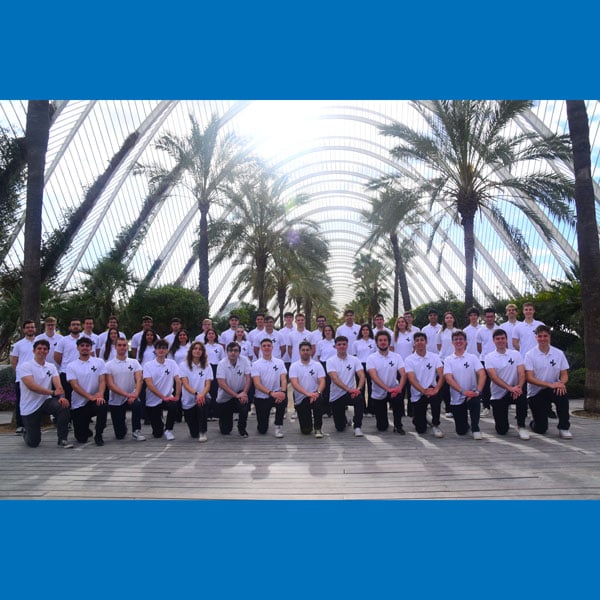
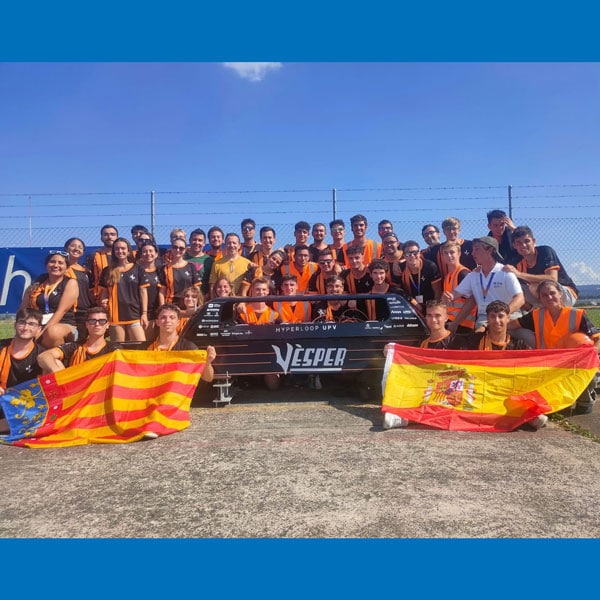
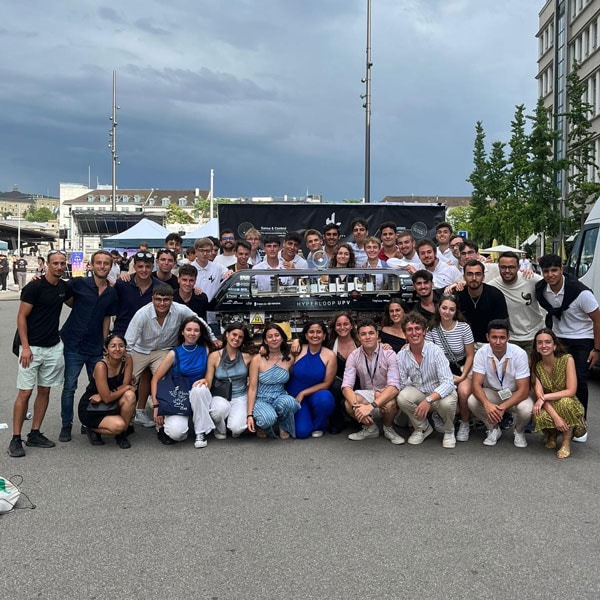
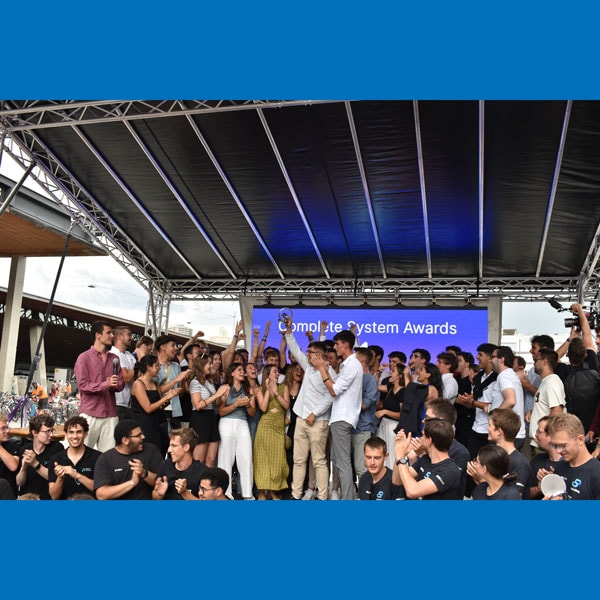
Hyperloop UPV, a dynamic team of 50 multidisciplinary students from Universitat Politècnica de València, is dedicated to innovating and perfecting hyperloop technology. Over nearly a decade, their creative approach and collaboration with sponsors have propelled them towards turning hyperloop into a reality, bridging education and the professional world.
The Team
European Hyperloop Week (EHW), a collaborative initiative by Hyperloop UPV, University of Edinburgh, Delft University of Technology, and ETH Zürich, emerged in 2019. More than a competition, EHW fosters a community-driven by curiosity and learning. The week-long event features leading tech companies and global university teams sharing their hyperloop advancements.
The Mission
Conducting research at the university through innovation in the hyperloop technology with the goal of creating a sustainable future
The Outcome
Stand in events, social media promotion, web presence, networking events, monthly newsletter
Volta
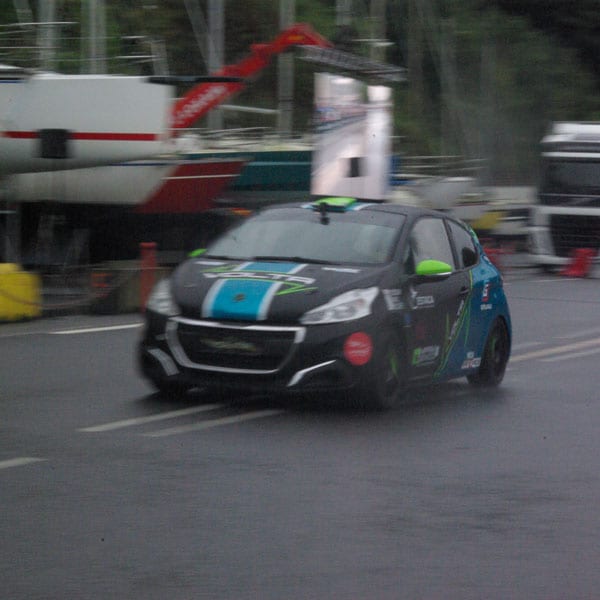
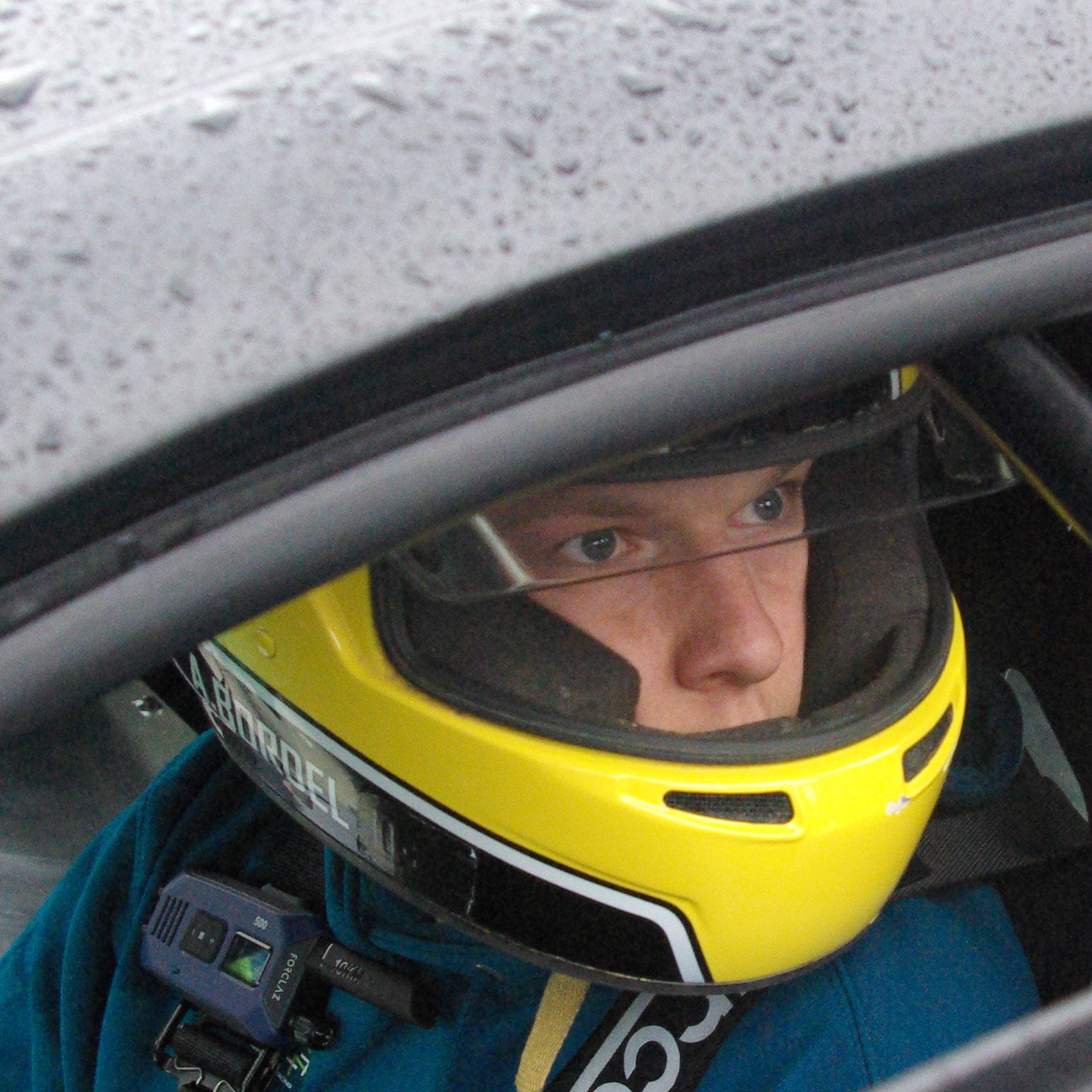
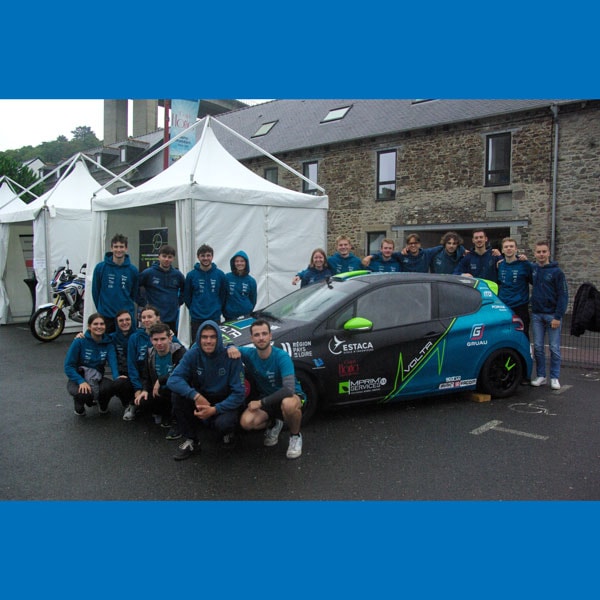
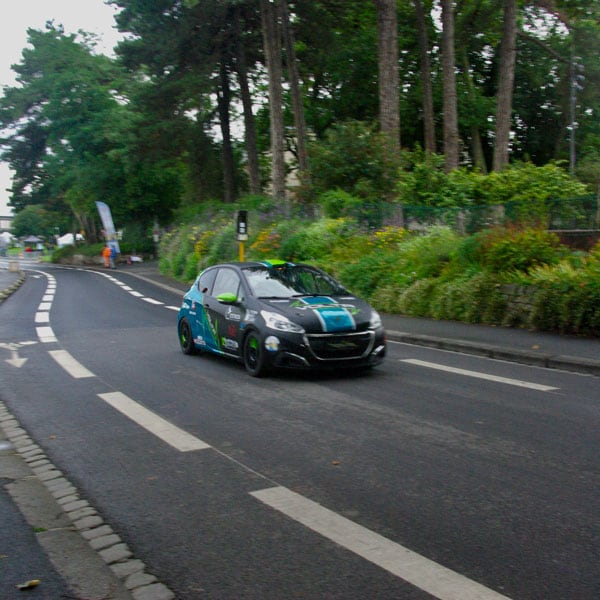
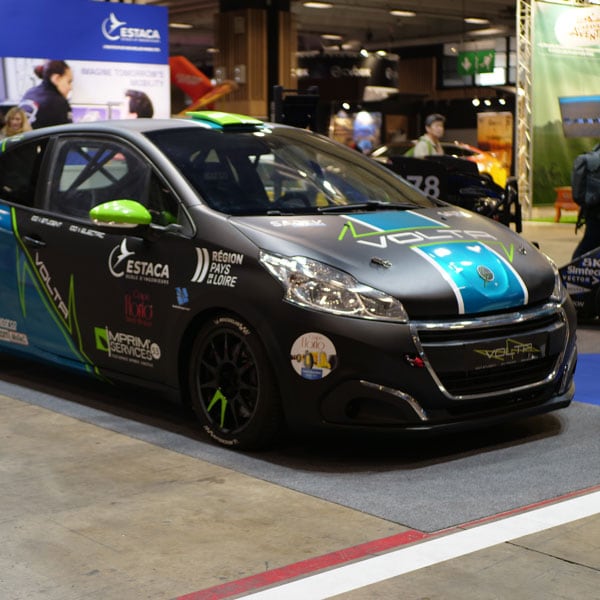
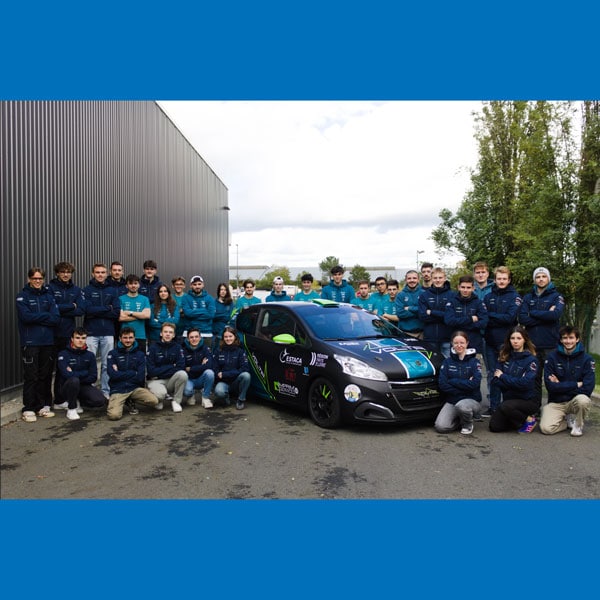
We are a team of 25 engineering students from ESTACA Laval, a school specializing in transport engineering. Our project, VOLTA, aims to develop the world’s first electrified Peugeot 208 Cup, homologated for competition. The car is already operational, and we are now in the optimization phase, preparing for competition in 2025.
The Team
Working from our 1000m² incubator, dedicated to student projects, the VOLTA team focuses on developing cutting-edge technologies. Though most started with limited EV knowledge, we are driven to innovate and optimize our car, preparing to compete against combustion-powered rivals in the 2025 championship.
The Mission
VOLTA aims to develop the world’s first electrified Peugeot 208 Cup. Organized like a company, the project is divided into several technical teams: Powertrain, Thermal, Chassis, Low Voltage, and High Voltage. Every aspect of the project is designed and developed by our team, with a focus on innovation, performance, and sustainability.
The Outcome
Our main objective is to compete in a professional touring car championship in France by 2025, facing combustion-powered rivals like TTE. After a successful debut at the Florio Cup in September, our next appearance will be at the Paris Motor Show in October 2024.
DrinkMate
A group of four students developed a smart beverage coaster that can measure the filling level of a drinking glass. The coaster can be used in many scenarios, such as lifestyle, health care and catering.
The Team
The team of DrinkMate consists of four students from the Master's program in Microsystems Engineering at the Albert-Ludwigs-University of Freiburg. The students worked in a design laboratory, where the project DrinkMate was established.
The Mission
A sufficient intake of water is crucial for a healthy lifestyle. DrinkMate recognizes and evaluates the drinking behaviour and, if necessary, sends a reminder to drink more.
The Outcome
At COSIMA 2018 in Munich, a national Competition of Students in Microsystems Applications, DrinkMate was able to convince the jury and it won the first place and qualified for the international competition "iCan".


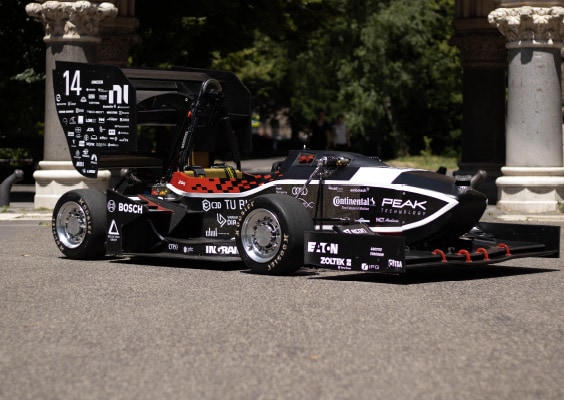
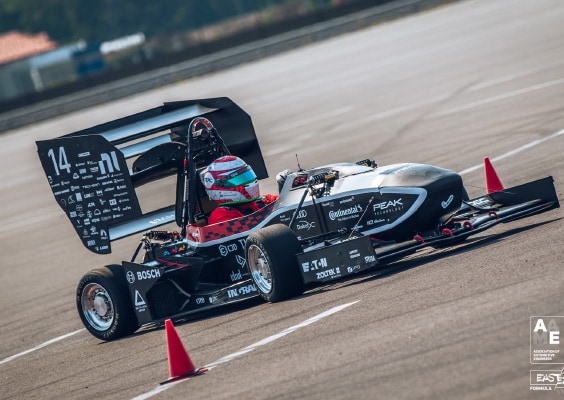
BME Formula Racing Team
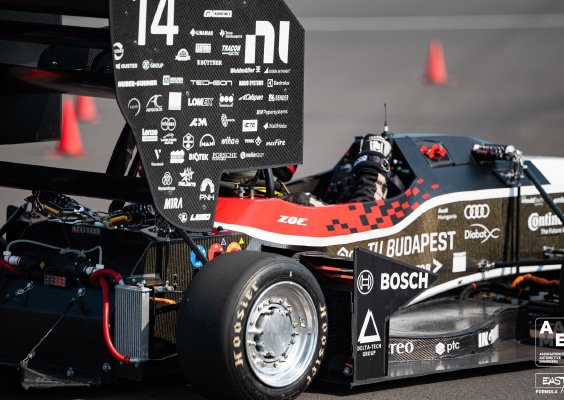
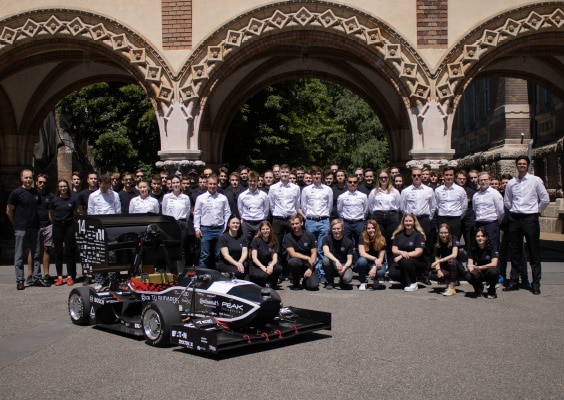
BME Formula Racing Team is a team of university students who design and build single seater, formula style race cars. We would like to achieve better results year by year competing in the high-level international field of Formula Student.
The Team
The team was founded in 2007 at TU Budapest. Since 2011 we have been the first and only team in Hungary to race in the more environmentally friendly electric category. In 2018 we constructed the first self- driving race car in Hungary as well.
The Mission
This complex project, which includes designing, manufacturing, testing and racing a race car, as well as the management of a team, helps students put theory into practice in a competitive environment and develop a wide range of technical and problem-solving skills through direct experience.
The Outcome
In 2023, we took part in 3 races successfully, finishing first within dynamic overall at Formula Student EAST. We also completed our first ever Trackdrive event within the Driverless category.
Innovived
Innovived VZW is a student team within the Postgraduate Techinvent of the KU Leuven.
The Team
We are a team of motivated (bio)chemical, electromechanical and electronics engineers working together to make sustainable 3D-printing a reality. For this reason, we engage in projects such as creating plastic from used cigarette butts and building an extrusion line to make it into a filament.
The Mission
Our mission is to bring biology and technology together. We believe that by creating a bridge between biology and technology, applications with great potential are made possible. We aim to establish and contribute to innovative projects within 3D-printing and to organize events that focus on knowledge transfer to future scientists.
The Outcome
After 2 years of development we will have developed an extrusion line, capable of meeting the industrial standard of 3D-printing filament for a multitude of different plastics. With this we can test new materials for 3D-printing, such as our filament created from used cigarette butts.


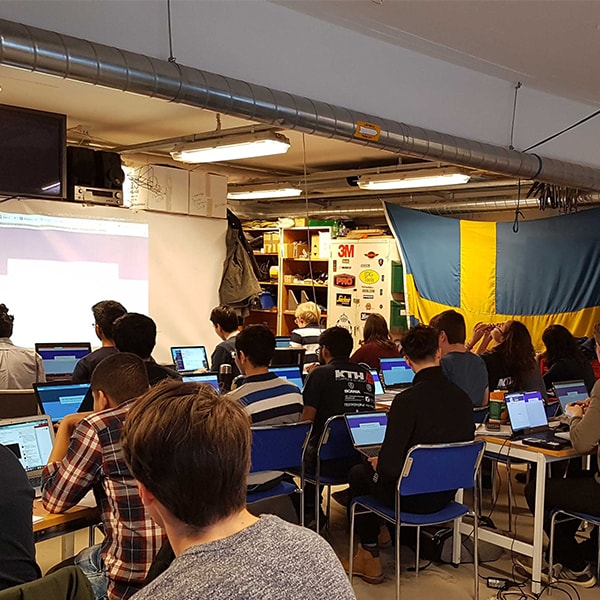
KTH Formula Student
KTH Formula Student is a non-profit project where we design, manufacture, test and compete with an autonomous electric racing car in Formula Student competitions across the world. The project is all about learning to work as a team and produce a high-quality product together. The experiences gained from the yearlong project gives the team members a head start in the transit between academic studies and future workplace.
The Team
We have a dedicated team of BSs and MSs students from different disciplines that share the same passion of racing. We pride ourselves in being a highly diverse team with different backgrounds and fields of interest.
Formula Student is Europe’s most established educational motorsport competition. Backed by F1 industry and high-profile engineers such as patron Ross Brawn. The competition aims to develop enterprising and innovative engineers and encourage more young people to take up a career in engineering.
The Mission
Utilizing our diversity, education and network to become the top performing Formula Student team in Scandinavia.
The Outcome
Our goal is to build a competitive car to compete in the Driverless category of Formula Student Germany, 2020.



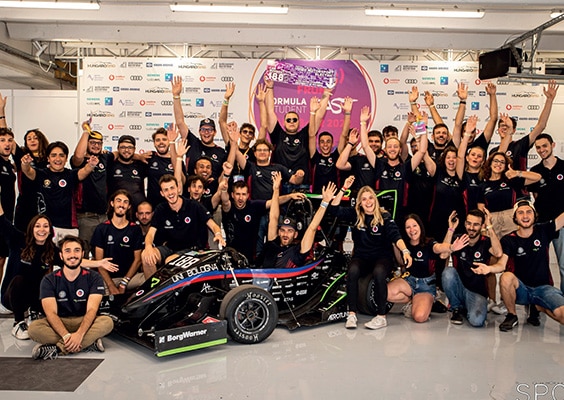
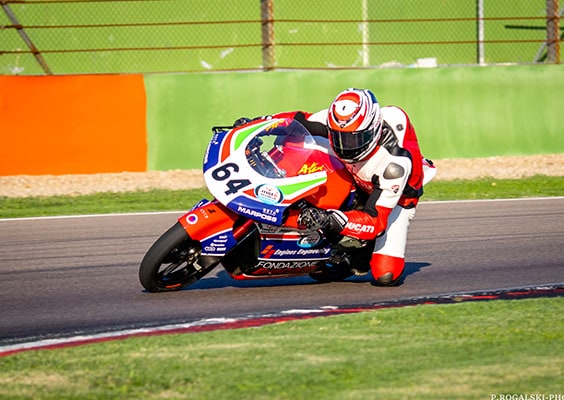
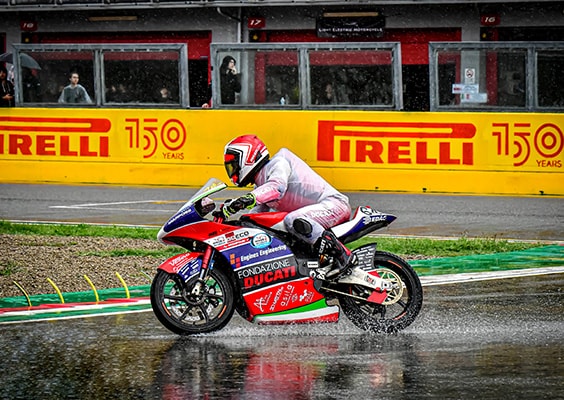
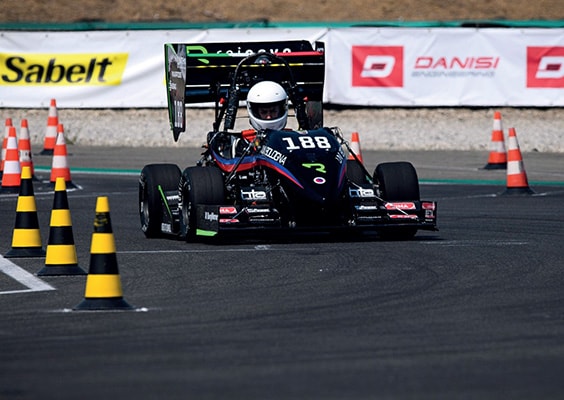
UniBo Motorsport (Bologna Motorsport A.S.D)
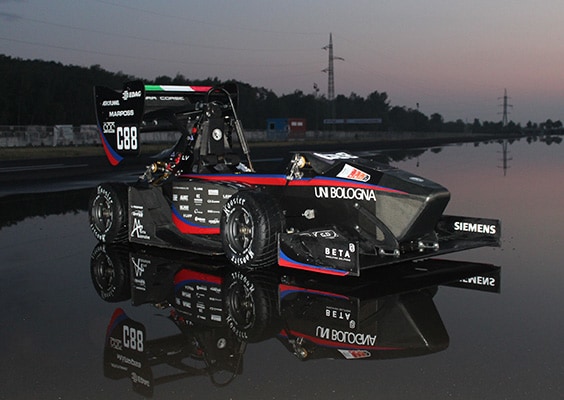
Unibo Motorsport is the official racing team of the University of Bologna; the project constitutes an ambitious growth path for all the students involved: in fact, its aim is to design and build three different types of vehicles that participate in various university competitions worldwide.
The Team
The team was created in 2009 by 10 students, while today UBM boasts more than 250 members, all coming from different faculties and departments; who are periodically found in the workshop in via Collamarini, working together with a shared passion for engines.
The Mission
These results are achieved through enthusiasm, passion and a spirit of sacrifice, as well as the ability to keep an optimistic outlook towards the task at hand. The university project establishes an important bridge between study and application, helping students grow in the professional field.
The Outcome
In recent years the Unibo Motorsport team has stood out, brandishing its excellent results, winning first place in the Moto Engineering Italy competition in Imola and in the Formula Student Spain competition in Barcelona and third place in the Formula Student Czech Republic.
WueSpace T-REX 2 (Tracking Rocket EXperiments)
T-REX (Tracking Rocket EXperiments) is about building automized optical rocket trackers. We build and program a motorized multi-camera system to detect and track rockets with the goal of producing high quality close-up footage for performance and failure analysis.
The Team
T-REX 2 is a project of WueSpace e.V., a group of students mainly from the field of Aerospace Computer Science at the Julius-Maximilians-University Würzburg in Germany. We cooperate closely with the SpaceTeam from the TU-Wien in Austria. In total there are roughly 11 people working on this project.
The Mission
Our software evaluates the frames coming from the cameras and uses Computer Vision to find the rocket in the picture. It then calculates the deviation of the rocket from the centre of the camera to control the motors in order to keep the rocket centered.
The Outcome
We would like to increase tracking reliability and quality compared to the previous cycle. The goal of T-REX 2 is to successfully track a rocket from the SpaceTeam and a rocket launch from Esrange in Kiruna, Sweden.


ARIS – Akademische Raumfahrt Initiative Schweiz - Project DAEDALUS
In September 2020, team DAEDALUS kicked off their mission to develop a hybrid rocket engine. Within nine months, the team integrated said engine into a student- developed rocket with the goal of launching it twice.
The Team
The team consists of six space-enthusiastic students in the last year of their bachelor’s degree in mechanical engineering. They work as part of a focus project at ETH Zurich, supervised by their professor at the Institute of Dynamic Systems and Control.
The Mission
The goal of the project is to design, develop, test, and integrate a 5 kN hybrid rocket engine into the 2021 ARIS rocket, thus laying the foundation for the first supersonic rocket launch at ARIS.
The Outcome
The main goal of project DAEDALUS is a series of successful launches with the ARIS rocket PICCARD. Furthermore, the team participates in the virtual Spaceport America Cup 2021 with the goal of winning their respective category.


EPFL Rocket Team

Founded in October 2016, the EPFL Rocket Team brings together motivated and passionate aerospace enthusiasts. Following the desire of many students from different engineering faculties to put into practice their accumulated knowledge, this interdisciplinary student initiative was born.
The Team
The team is composed of more than 80 students. The project’s goal is to design and launch a rocket carrying a scientific experiment at the Spaceport America Cup, the largest international student rocketry competition. This contest takes place every year, in June, in New Mexico (USA).
The Mission
After Project Matterhorn (2018) and Project Eiger (2019), the team attended the Spaceport America Cup for the 3rd time presenting Project Bella Lui in 2020. Bella Lui will be propelled by a hybrid motor (Liquid oxidiser, solid fuel) entirely designed by the team.
The Outcome
In addition to refining their engineering knowledge, the Spaceport America Cup allows the team members to build a project over a long period facing financial and technical constraints — challenges they all will encounter as future engineers.


STAR (Student Team for Aerospace and Rocketry
STAR is a rocketry team founded in 2018 and comprised of 35 engineering students from the University Carlos III of Madrid (UC3M).
The Team
The objective of the team is to apply the knowledge acquired from our university degrees to solve complex engineering challenges. The focus is on the development of a reusable rocket in order to promote and develop the aeronautical and space sciences at a collegiate level.
The Mission
For the 2019-2020 season, the team’s mission is to beat the altitude record for a rocket designed by a Spanish university team. In order to achieve this, STAR is developing a supersonic vehicle using an advanced telemetry system, composite materials and an extensive computer simulation as well as analysis.
The Outcome
During the last season, the first rocket called “Rattlesnake”, a 1.5 m vehicle, was developed. This project helped the team members to become familiar with the design, manufacturing and integration processes. After two consecutive successful launches, STAR has obtained the necessary certifications for further launches.



Técnico Solar Boat
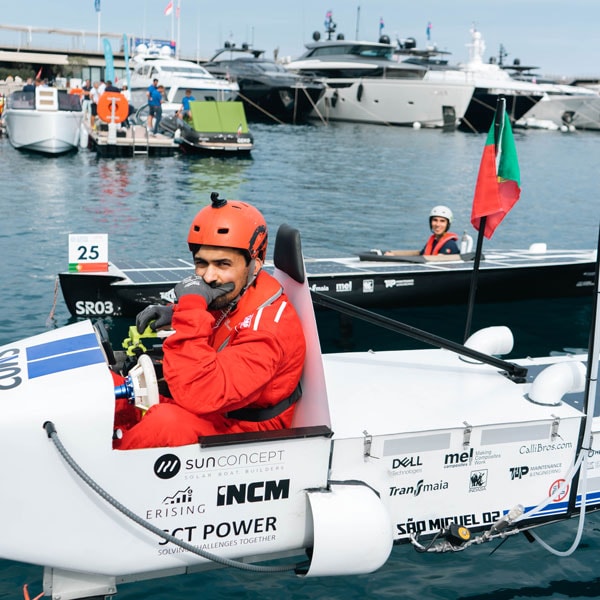
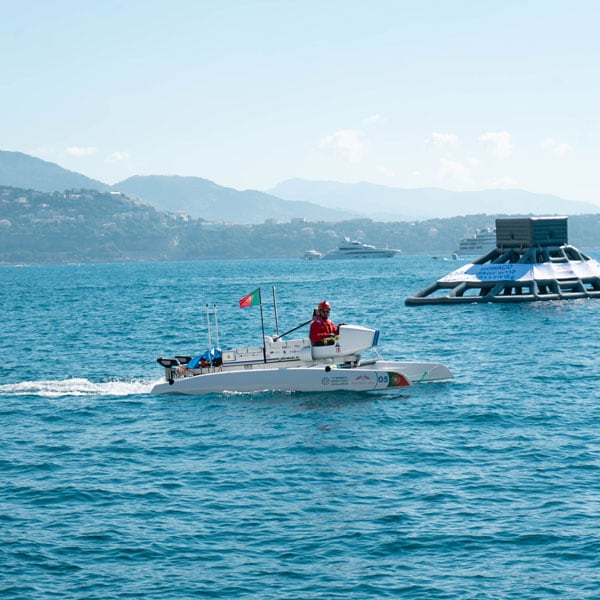
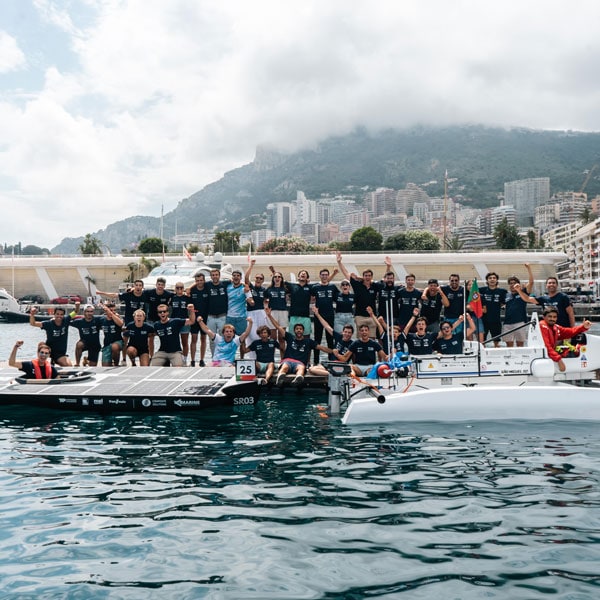
Técnico Solar Boat is an open-source university project consisting of students from various engineering disciplines at Instituto Superior Técnico. We design and develop manned boats, powered by hydrogen and solar energy, which are entirely designed and manufactured by the team.
The Team
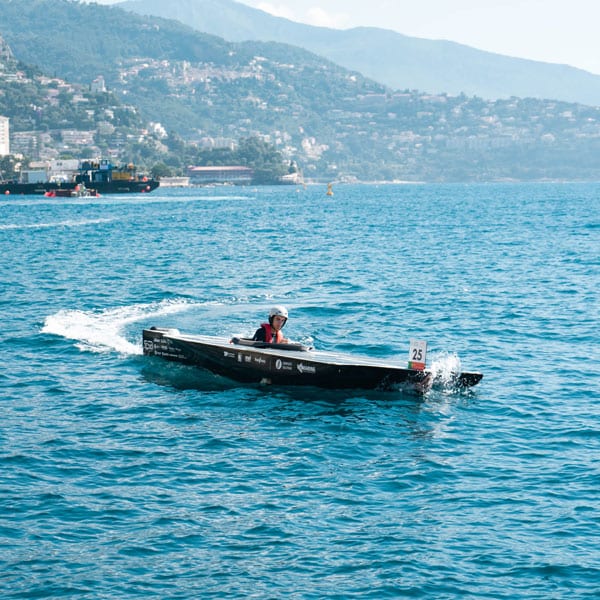
We design and manufacture manned boats, powered by hydrogen and solar energy. Currently, we have three working prototypes, the one actively competing solar prototype is São Rafael 03; the first Portuguese hydrogen-powered boat São Miguel 01, and our first autonomous prototype São Pedro 01.
The Mission
Our main goals are to enhance public awareness of renewable energy sources, promote sustainable mobility, and strive to be pioneers and influencers in our field.
The Outcome
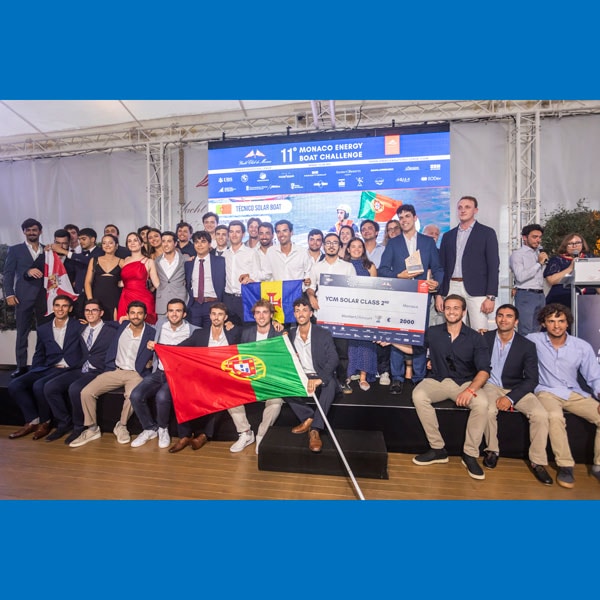
We compete in the Monaco Energy Boat Challenge, one of the biggest solar boat competitions, where more than 30 teams from various nationalities participate. This year we won second place with São Rafael 03 and the Eco-Conception prize for the design of our hydrogen-powered boat.
UPC VILANOVA E3-TEAM
UPC VILANOVA E3-TEAM is a competition team comprised of students of electrical, electronic, mechanical, computer and industrial design engineering from the Polytechnic University of Catalonia located in Vilanova i la Geltrú (EPSEVG).
The Team
This project was born with the purpose of putting into practice all the knowledge acquired during their studies. At the same time, the team members would like to use their knowledge in the sustainable mobility and competition sector, with the aim of developing new technologies.
The Mission
The mission is to create the best possible prototype of an electric motorbike with a limited budget to participate in the competition of MotoStudent Electric. In addition, the team strives to learn more, to get ready for the professional world, and to leave the best foundations for the next generations of students working on this project.
The Outcome
All team members could strenghen their knowledge of EV's technologies and engineering. Together with this great achievement already, everyone contributes to the goal of creating the best possible prototype for MotorLand in 2021.


Open Source Project – BLDC Motor Controller
Open source project for electronics engineer and hobbyist designs made available to the public to use.
The Project
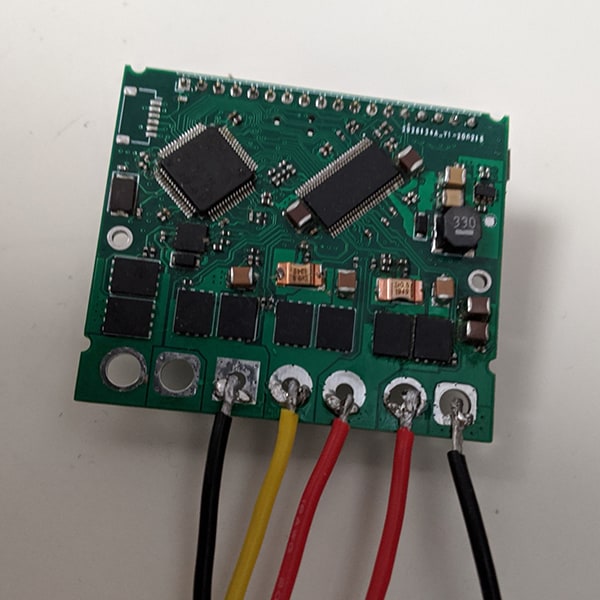
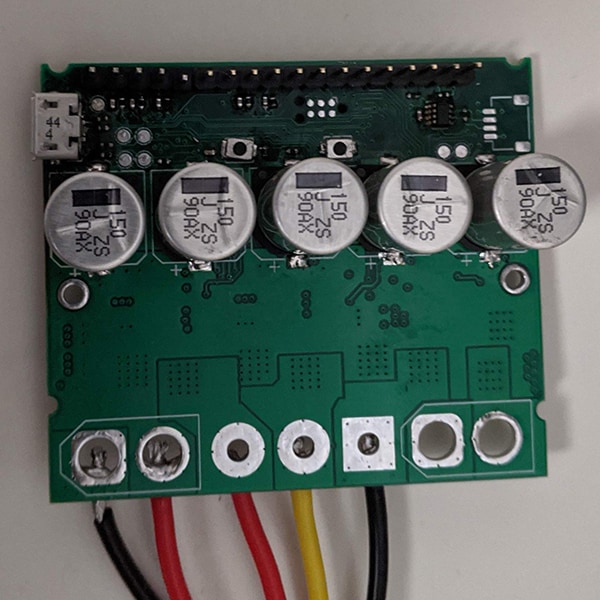
This project features a Brushless DC (BLDC) Motor Controller. BLDC motors are largely used by hobbyists and industry professionals. These motors need a special controller to drive them and normally these controllers are industrial grade and very expensive. For this reason, they are not easily affordable to the hobbyist community or students.
The Mission
The purpose of this project is to design a motor controller that is affordable. The design is based on another open source project called “Odrive” where a single motor controller can control two motors. This design was used as a reference, it was then modified to reduce its size, and it was made available for only one motor. This will offer more flexibility.
The Outcome
This motor controller is publicly accessible on the platform Github. Every student or hobbyist can use this project for their designs and modify it according to their needs.


Forze Hydrogen Racing
Forze is an interdisciplinary team consisting of more than 50 students from Delft University of Technology who design, build and race hydrogen-electric racing cars to promote the potential of hydrogen as a fuel source for vehicles.
The Team
The team consists of engineers that desire to further what is possible with hydrogen-based transportation, specifically in the field of hydrogen-electric racing. In a span of less than 13 years, they have evolved from building hydrogen go-karts to full-size LMP3-based hydrogen electric racing cars.
The Mission
The Forze team aspires to develop hydrogen cars capable of competing in and winning various motor-racing events. The Forze VIII achieved second place in the 2019 Dutch Supercar Challenge, becoming the fastest hydrogen-electric racing car to ever compete in an official race.
The Outcome
Having developed a newer car model, the Forze IX, the team’s ultimate goal is participation (and hopefully success) in one of the most demanding motor races in the world: 24 Hours of Le Mans. This would prove the viability and potential of hydrogen-electric vehicles worldwide.


HofSpannung Motorsport e. V.

HofSpannung Motorsport e. V. is a Formula Student Team that has been developing and manufacturing fully electric-powered racing cars for participation in the Formula Student Competitions since 2013.
The Team
The team consists of many students from the University of Applied Sciences Hof, studying very different courses, which often opens up completely new perspectives. Interdisciplinary cooperation, a healthy curiosity and a love of all things racing unites the team.
The Mission
The team seeks to empower other students with the message that any student from any faculty can learn how to develop, build and market a car from scratch, even with modern features such as intelligent control and stabilisation systems.
The Outcome
The team aspires to create a competitively viable electric racecar. Through the process of researching and developing, the team desires to gain valuable automotive experience and improve their cooperation/interpersonal skills.


AGH Space Systems Rocket Team
AGH Space Systems is a student construction team, operating at AGH University of Science and Technology since 2014, working on the development of space industry technologies - building rockets, planetary rovers and stratospheric balloon gondolas. Association consists of 3 specialised sections: rocket team, rover team and marketing.
The Team
The rocket and payload team works on constructing rocket’s mechanics, drive, electronics and software as well as planning and conducting scientific research. Since 2014 the team has already constructed 7 rockets and performed a number of experiments on the influence of stratospheric conditions on biological material.
The Mission
Our goal is to develop space industry-related technologies, conduct scientific research and promote space exploration. We take part in various international competitions and exchange knowledge with the aim to evaluate our projects and gain valuable experience.
The Outcome
Our rocket team’s accomplishments have been recognized in many international challenges - among our successes are: 1st place in the Virtual Spaceport America Cup 2021, 2. place in SDL Payload Challenge 2021, we also presented numerous papers during AIAA SciTech Forum and 25-th ESA Conference.

KSAF - Student Photography Agency of Krakow - is an organization operating at AGH University, taking care of documenting the most important events taking place at AGH University and throughout Krakow.


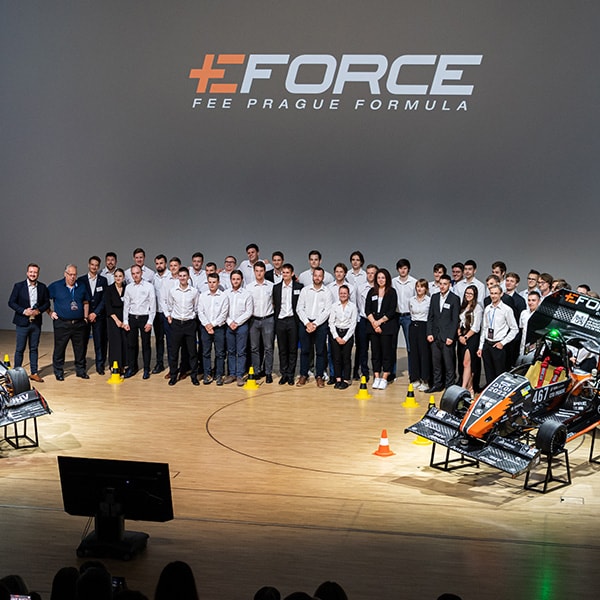
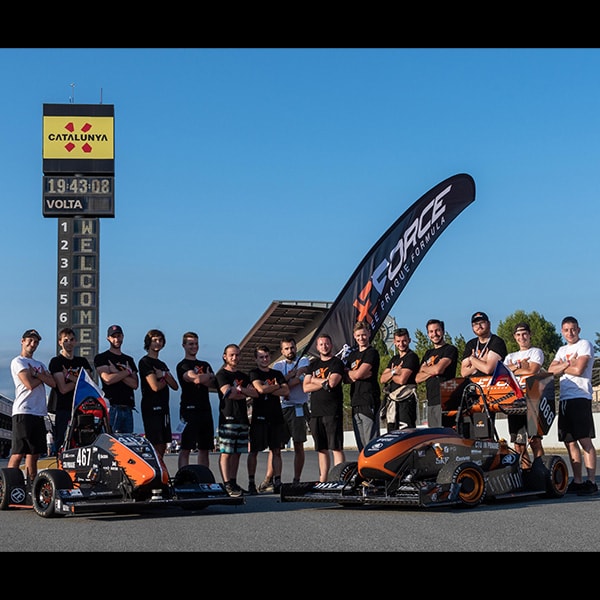
eForce FEE Prague Formula
eForce is a team of the Formula Student competition under the CTU in Prague. Since its founding in 2010 eForce Prague Formula has remained the first Czech team in the Formula Student competition to successfully build a formula with electric drive and autonomous control.
The Team
The team eForce consist of 60 people divided into 3 groups, Electrical group, Mechanical group and Autonomous group. Electrical group consist of 25 persons. 15 of them are hardware developers.
The Mission
Team focuses on to making everything by us, these includes mainly all of the electronics. This includes wiring, electronical control units and even our own motorcontrollers.
The Outcome
The team has managed to build in its 12-year history to build 11 electric car and one autonomous. The team achieved several achievements including winning competitions in the USA and Canada with FSE.04x and multiple overall victories in Europe with other generations.




USRacing
We are the official motorcycling team of the University of Seville. We are united by the realization of a project: the design and manufacture of an electric motorcycle for racing in the International Competition Motostudent.
The Team
The team is made up of students of different degrees from the University of Seville. We have one mission: to create and design a prototype of a race electric motorcycle to participate in MotoStudent International Competition, which is held bi-annually.
The Mission
We will carry out improvements in the design of structural parts focused on lightening the motorcycle and its aesthetic aspect. Having electric motorcycles gone from a future concept to a present mobility path, Our energy is not only on their development, but also on future innovations that will improve this paradigm.
The Outcome
Being part since the beginning of MotoStudent, thus being considered one of the pioneering university motorcycling teams in the world, USRacing has historically achieved resounding success within this international championship. However, we are prepared for our next step forward: winning the next competition race.


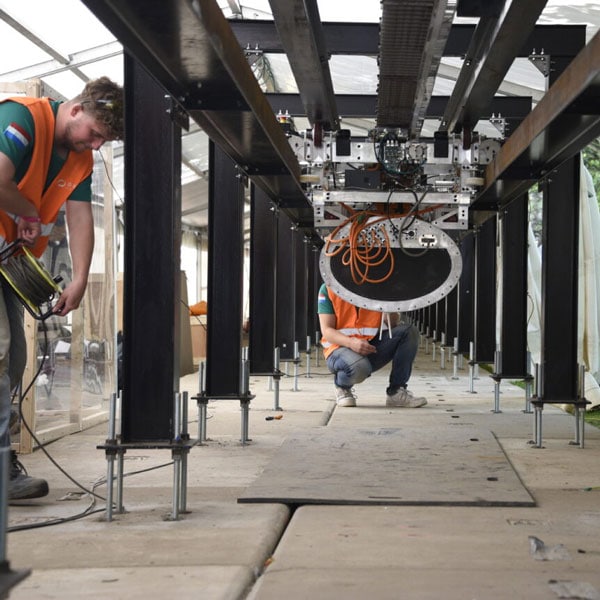
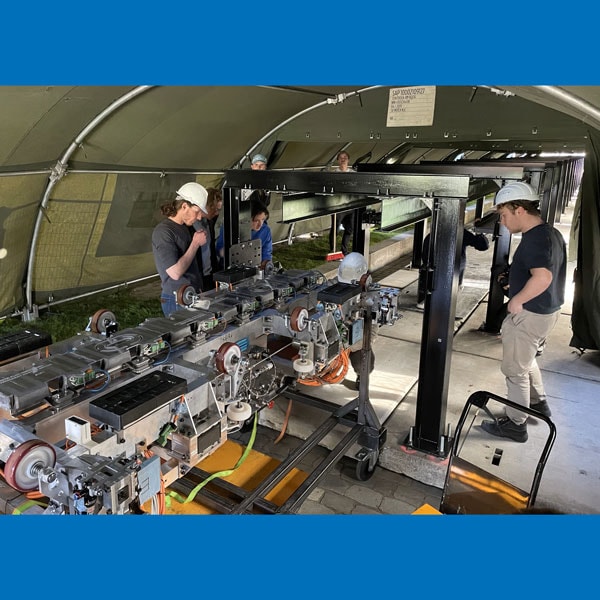
Delft Hyperloop
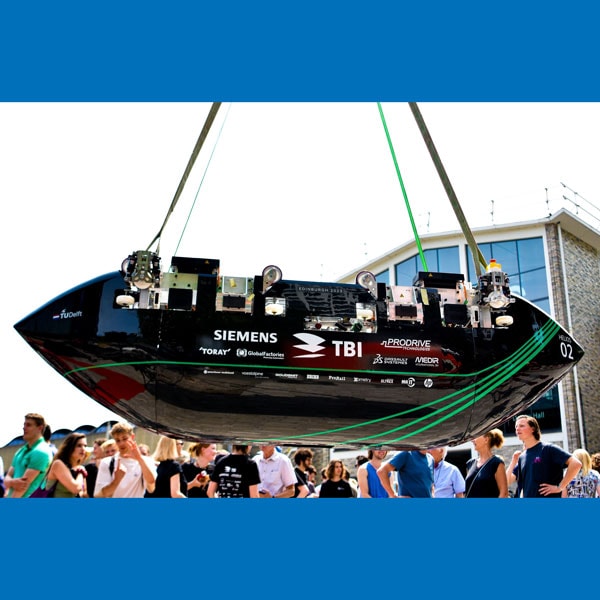
The Hyperloop, a revolutionary mode of transportation can achieve efficient speeds of up to 1000 km/h through a combination of magnetic levitation and propulsion in a vacuum tube. Each year, we design, develop, and test a new version of our Hyperloop.
The Team
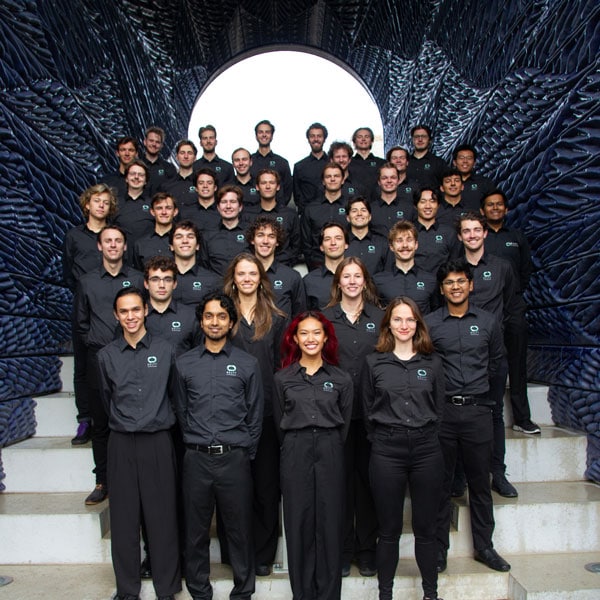
We are a student team from TU Delft consisting of 40 students with diverse technical backgrounds. For the 8th consecutive year, we are dedicated to developing our own Hyperloop system.
The Mission
Our mission is to develop an innovative hyperloop system to accelerate its full-scale implementation. To achieve this, we aim to win the European Hyperloop Week in Zurich this summer.
The Outcome
Previous teams have successfully participated in the hyperloop competitions, winning multiple prices. This year we want to win the full pod award by being the first team do demonstrate a lane-switch.
Get in touch
Recognizing the importance and value of our Educational Customers, Mouser offers the following incentives to make your teaching a little bit easier:
• Request for Quote
• Project Pricing on Request
• Tech Support Available
• Credit/Procurement Cards Accepted
• Purchase Orders Welcomed
• Net 30 Terms
for Most Schools
For bids & quotes: unisales@mouser.com
For tech support: tech@mouser.com